


What Is a Wind Flag and How Is It Used?
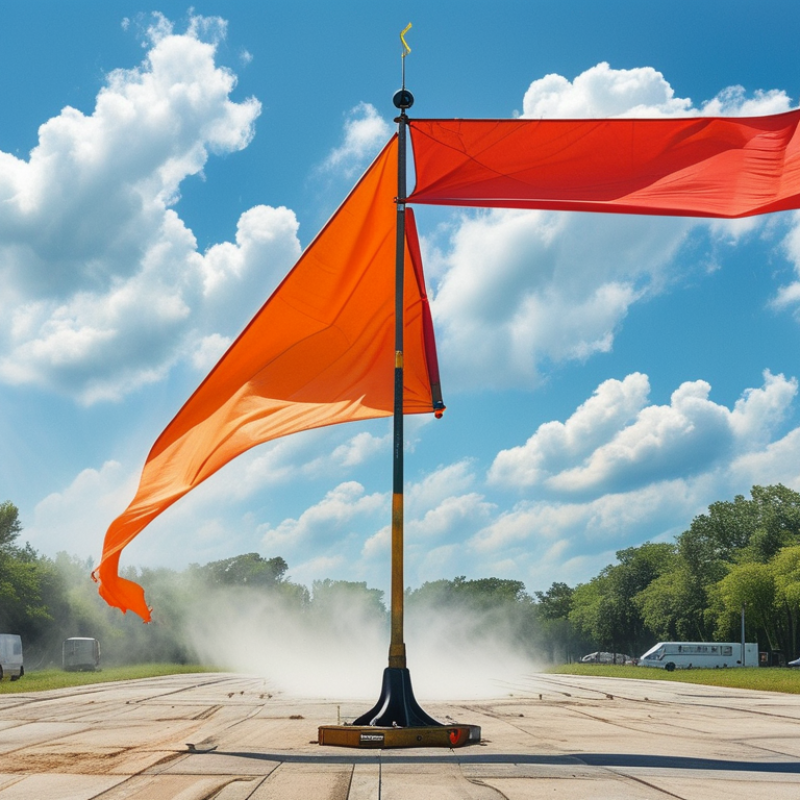
A Wind Flag is a simple visual tool that reveals what the air is doing. It usually has a bright fabric panel, a flexible pole, and a swivel or fixed mounting point. When the fabric stretches, its free end points away from the incoming wind. The stronger the breeze, the more clearly the material lifts and extends.
Aviation meteorologist John D. Cox offers a useful principle: “Wind is invisible, but its effects are not.” This idea explains why a Wind Flag remains valuable at airfields, construction zones, outdoor events, farms, and temporary work areas. A pilot may notice the flag before landing. A site supervisor may use it to judge whether dust, lightweight materials, or elevated work require extra caution. The flag does not provide exact speed. It provides immediate direction and a rough visual sense of strength.
Installation still matters. The flag needs open space, a clear line of sight, and fabric that moves freely. Nearby walls, trees, vehicles, or machinery can distort the airflow. A weathered flag may sag and give a misleading signal. That small weakness is easy to overlook.
A Wind Flag is not a replacement for an anemometer or an official weather report. It is a practical field indicator, not a precision instrument. Used with local forecasts and trained judgment, it can make changing wind conditions easier to understand. Sometimes, the simplest warning is the one people notice first.
Definition and Basic Features of a Wind Flag
What Is a Wind Flag and How Is It Used?
Definition and Basic Features of a Wind Flag
A wind flag is a lightweight fabric marker that shows wind direction. It usually hangs from a short pole, line, or rotating fitting. Unlike a rigid weather vane, it responds to small air movements. Its free end points downwind, while the attached end faces the incoming wind.
Common wind flags use bright, high-contrast fabric for easy viewing. Orange, red, yellow, and white are practical choices in open areas. Some designs include a swivel, reinforced seams, and weather-resistant material. The flag may flutter gently in a light breeze and extend nearly straight in stronger wind. This movement offers a rough visual guide, not an exact measurement. An anemometer is more suitable for recording wind speed. In field use, people watch the flag near open spaces, sports areas, farms, and temporary work zones. Nearby walls, trees, and buildings can distort its reading. That detail is easy to overlook.
Tips: Install the flag above nearby obstacles when possible. Check that the pole can rotate freely. Inspect fading, loose stitching, and tangled fabric regularly. Watch it for several seconds instead of judging one sudden movement. A wind flag is simple, but placement matters. My initial assumption was that any flutter showed the true wind. In practice, uneven gusts can make the direction appear unstable. Record repeated observations for a more dependable result.
| Data Dimension | Definition or Feature | Practical Information | Why It Matters |
|---|---|---|---|
| Basic Definition | A wind flag is a lightweight piece of fabric attached to a pole, line, or other support that moves in response to airflow. | It provides a quick visual indication that wind is present and shows the general direction from which the wind is coming. | It offers a simple, immediate way to observe wind conditions without electronic equipment. |
| Main Function | The primary function is to indicate wind direction and provide a rough visual impression of wind strength. | The flag extends, flutters, droops, or changes angle as airflow conditions change. | Users can make fast operational decisions in outdoor environments. |
| Wind Direction | A flag generally points away from the direction the wind is coming from. | For example, a flag pointing east usually indicates wind moving toward the east, originating from the west. | This distinction prevents confusion between the wind's source direction and its movement direction. |
| Typical Materials | Common materials include nylon, polyester, cotton, and other lightweight, weather-resistant fabrics. | Outdoor flags are often made from synthetic fabric because it dries quickly and withstands repeated exposure to wind and moisture. | Material selection affects visibility, durability, drying time, and sensitivity to light airflow. |
| Shape and Size | Wind flags may be rectangular, triangular, tapered, or sleeve-shaped, with dimensions selected for the installation site. | Larger surfaces are easier to see from a distance but may require stronger supports and more secure attachment. | Shape and size influence how clearly the flag responds to wind and how well it remains visible. |
| Support Structure | A wind flag normally uses a vertical pole, horizontal line, swivel, or flexible attachment point. | The support should be stable and positioned where buildings, trees, or walls create as little airflow obstruction as possible. | A poorly positioned or loose support can produce misleading movement or prevent the flag from extending. |
| Light Airflow | In very light wind, the fabric may hang loosely or move only occasionally. | The flag may not provide a reliable directional indication until airflow becomes strong enough to lift the fabric. | This shows that a wind flag is a qualitative indicator rather than a highly sensitive measuring instrument. |
| Moderate Airflow | With moderate wind, the flag usually extends more consistently and points clearly away from the wind source. | Fluttering and periodic changes in angle may occur as gusts pass through. | These movements help users recognize changing wind direction and variable wind conditions. |
| Strong Airflow | In strong wind, the flag may become fully extended, flutter rapidly, or experience significant strain. | Attachment points and poles should be checked regularly, especially during gusty or severe weather. | Excessive wind can damage the flag or support and may create a safety hazard. |
| Common Applications | Wind flags are used near runways, roads, marine facilities, agricultural areas, construction sites, and outdoor recreation locations. | They can help indicate crosswinds, support basic site awareness, and provide a visible warning of changing airflow. | Their usefulness comes from being readable at a distance and requiring no power supply. |
| Visibility | High-contrast colors and reflective or bright fabric improve visibility in daylight and low-light conditions. | The flag should be installed where it is not hidden by structures, vegetation, or surrounding equipment. | Clear visibility is essential when the flag is used for safety-related observation. |
| Accuracy Level | A wind flag provides approximate direction and a general visual impression of airflow, not precise wind-speed data. | Accurate wind-speed measurement requires an instrument such as an anemometer, while precise direction monitoring may require a wind vane or electronic sensor. | Understanding this limitation helps users select the right tool for the task. |
| Maintenance | Routine maintenance includes checking fabric condition, stitching, fasteners, pole stability, and signs of weather damage. | The flag should be cleaned and replaced when it becomes excessively faded, torn, or waterlogged. | Good maintenance preserves visibility and ensures that movement continues to reflect airflow rather than equipment problems. |
| Key Limitation | Nearby obstacles, turbulent airflow, rain, ice, and a wet or damaged fabric can affect the flag's movement. | Readings should be interpreted together with the surrounding environment and observed over several moments. | Environmental factors can reduce reliability, particularly in confined or highly obstructed locations. |