

China Top 10 Lockout Station Manufacturers

Choosing a reliable Lockout Station manufacturer requires more than comparing product photos or advertised prices. China has a broad manufacturing base, serving factories, utilities, construction sites, and maintenance teams worldwide. However, supplier quality can differ significantly.

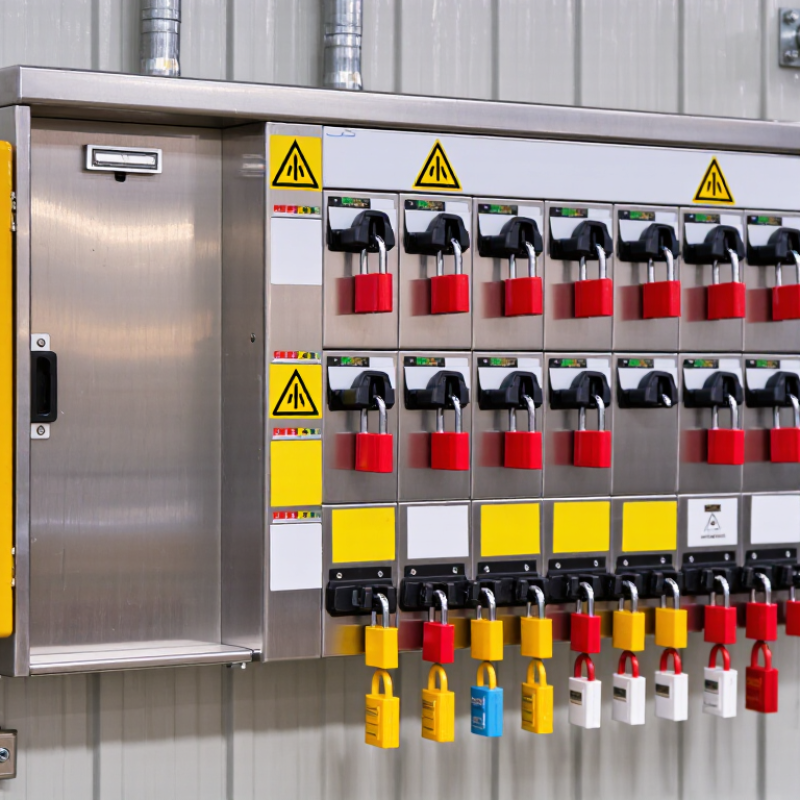
This guide examines ten leading China-based Lockout Station manufacturers and the factors that make them worth consideration. The evaluation focuses on product durability, manufacturing experience, safety design, customization, certifications, and customer support. A practical station should keep padlocks, tags, hasps, breaker lockouts, and warning labels organized in one visible location. It should also withstand dust, oil exposure, frequent handling, and busy industrial environments.

Details matter.

A strong manufacturer normally provides clear material information, dimensional drawings, sample services, and traceable quality procedures. Stainless steel, powder-coated metal, and impact-resistant plastic each suit different workplaces. Buyers should review locking capacity, wall-mounting methods, label visibility, and compatibility with existing isolation procedures. Product claims should be checked against test records and current documentation, not accepted automatically.

This overview is designed for procurement managers, safety professionals, and distributors seeking dependable partners. It considers real purchasing concerns, including lead times, minimum order quantities, packaging, export experience, and after-sales communication. Yet no ranking remains perfect forever. Factory capabilities change, and public information may be incomplete. Readers should confirm specifications, certifications, and production capacity directly before making a final decision. The best choice is rarely the cheapest station. It is the one that remains organized, visible, and reliable when maintenance work becomes urgent.
China Top 10 Lockout Station Manufacturers

Lockout Stations Defined: OSHA 1910.147, ISO 45001, and ANSI Z244.1

China’s top 10 lockout station manufacturers should be assessed against safety standards, not appearance alone. A lockout station stores padlocks, tags, hasps, and group-lockout devices near hazardous energy points. OSHA 1910.147 requires employers to control electrical, mechanical, hydraulic, pneumatic, and thermal energy during servicing. OSHA’s Fiscal Year 2023 enforcement data listed 2,554 lockout/tagout violations, showing that basic procedures still fail in real workplaces.

ISO 45001 adds a broader management approach. It requires hazard identification, worker participation, documented controls, and continual improvement. ANSI Z244.1 addresses the wider use of hazardous-energy control methods, including alternative measures when full lockout is not suitable. A reliable manufacturer should provide durable labels, clear device compatibility, corrosion-resistant materials, and traceable inspection information. In practice, a crowded cabinet can slow response. I have seen stations with spare locks but no visible procedure. That weakness matters during a rushed maintenance task.

Tips: Check whether each station matches your written energy-control procedure. Verify lock and tag quantities monthly. Keep emergency contacts visible. Photograph the station after inspection. Do not assume a full cabinet proves compliance. OSHA data indicates enforcement remains active, while ISO 45001 certification reports show continuing global adoption of structured occupational safety systems. Still, certification alone cannot replace hands-on training. A short worker interview may reveal more than a polished audit file. Some stations also need redesign after equipment changes, and this is often overlooked.

China’s Top 10 Manufacturers: Products, Certifications, and Export Markets

China’s top 10 lockout station manufacturers serve a growing industrial safety market. UNIDO reported China produced about 31% of global manufacturing value added in 2022. This capacity supports large-scale production, customization, and export delivery.

Their product ranges usually include wall-mounted lockout stations, safety padlocks, hasps, tags, breaker lockouts, valve devices, and cable systems. Some factories also supply group lock boxes for maintenance teams. Better suppliers maintain ISO 9001 systems and provide test records for materials and durability. ISO 45001 supports their occupational safety management. Export models may also address CE, UKCA, or regional electrical requirements. Certification claims still need verification.

Export markets include North America, Europe, the Middle East, Southeast Asia, and Australia. Buyers commonly assess audit reports, sample approvals, packaging quality, and replacement speed. ILO data recorded 2.78 million work-related deaths annually, showing why dependable isolation equipment matters (ILO, Safety and Health at Work, 2019). Products must work beside dusty panels, oily gloves, and crowded maintenance rooms. Small details matter.

The “top 10” label is not always independently audited. Export volume can hide weak documentation. A careful comparison should examine factory experience, certification scope, testing methods, and customer feedback. Some suppliers look impressive online but provide limited technical evidence. That deserves scrutiny.

China’s Top 10 Lockout Station Manufacturers: Products, Certifications, and Export Markets

This non-company-specific industry snapshot compares the main product categories supplied by leading Chinese lockout-station manufacturers. The compliance indicators refer to standards and market requirements commonly associated with industrial lockout/tagout products, including OSHA 29 CFR 1910.147, ANSI/ASSP Z244.1, ISO 45001, CE-related EU market requirements, and UKCA-related UK market requirements. Export-market figures represent the number of destination regions commonly served by suppliers in each product category, rather than individual company performance.

Supplier Comparison: Station Capacity, Materials, Customization, and MOQ

China Top 10 Lockout Station Manufacturers

Comparing the top ten lockout station manufacturers requires more than checking catalog photos. Station capacity should match your facility’s real equipment count. A compact wall station may hold 12 locks, while larger cabinets can store tags, hasps, and dozens of devices. In practical factory audits, unused space often indicates poor planning, not superior capacity.

Materials also matter. Powder-coated steel offers strong impact resistance, while ABS plastic reduces weight and corrosion concerns. However, thin plastic can crack in cold workshops.

Customization separates experienced suppliers from basic catalog sellers. Ask whether they can adjust hook layouts, colors, labels, language, and mounting holes. Reliable manufacturers should provide drawings, sample approvals, and clear material specifications. MOQ deserves equal attention. A low MOQ supports pilot orders, but it may increase unit cost. Large MOQs can lower pricing, yet create unwanted inventory. Some published capacity figures remain optimistic, so physical samples should be checked.

Tips:

Request a capacity chart, material test details, and a written MOQ before ordering. Compare lead times, replacement parts, and packaging quality. Do not judge suppliers by price alone. A cheaper station may require earlier replacement. Small errors happen, and even careful comparisons can miss local storage needs. Recheck the station after installation.

Quality Verification: GB/T 33579 Compliance, Testing, and Traceability

When comparing China’s top 10 lockout station manufacturers, GB/T 33579 compliance should guide the quality review. The standard focuses on controlling hazardous energy through effective lockout and tagout practices. A reliable manufacturer should explain how each station supports identification, isolation, and authorized access.

Testing must go beyond appearance. Inspectors should check material strength, label durability, corrosion resistance, and performance under repeated use. Plastic panels should remain clear after impact testing. Metal hooks and holders should resist bending during practical loading. Tags must stay readable after moisture, abrasion, and exposure to common workplace oils. Short tests can reveal serious weaknesses.

Traceability adds confidence. Each batch should carry a production code linked to material records, inspection results, and shipment details. Independent laboratory reports are useful, but buyers should verify their scope and testing dates. Factory audits can confirm whether documented procedures match actual production. A polished file is not enough. Some suppliers still treat traceability as paperwork, which creates uncertainty after a product failure. Reviewers should also examine corrective-action records and sample consistency across batches. Even well-designed stations may need improvement when workers use thick gloves, crowded boards, or poorly positioned labels. Practical feedback should influence the final purchasing decision.

China Top 10 Lockout Station Manufacturers - Quality Verification: GB/T 33579 Compliance, Testing, and Traceability
Manufacturer-neutral verification matrix for lockout stations and related lockout/tagout components. No company or brand data is displayed.
No. Quality Dimension Verification Focus Recommended Test or Inspection Acceptance Evidence Traceability Record
1 GB/T 33579 Alignment Confirm that the station supports an organized hazardous-energy control and lockout/tagout process. Review the product specification, operating instructions, energy-isolation workflow, and intended application. Documented conformity basis
Product use limitations and applicable energy-control procedures are clearly defined.
Controlled technical file, revision history, and signed compliance review.
2 Station Capacity and Layout Verify that the board, cabinet, hooks, and holders can accommodate the stated quantity of locks, tags, hasps, and accessories. Measure usable storage positions and compare them with the declared capacity; inspect clearances and access. Capacity matches specification
No interference during normal retrieval and replacement of devices.
Approved drawing, bill of materials, capacity inspection sheet, and batch number.
3 Material and Structural Integrity Assess the strength and stability of the mounting panel, cabinet, hooks, brackets, and fasteners. Conduct dimensional inspection, mounting inspection, and load testing using the declared working load or approved design value. No deformation or detachment
Components remain secure after the specified test load and installation condition.
Material certificate, incoming inspection report, structural test record, and lot identification.
4 Lock and Hasps Compatibility Confirm that storage positions accept the intended safety padlocks, group lockout hasps, and related devices without obstruction. Fit-check representative devices across the stated size range; verify insertion, removal, and retention. Compatible by design
Devices remain visible, accessible, and securely retained during routine use.
Compatibility matrix, sample identification, inspection photographs, and test date.
5 Label and Signage Durability Ensure that safety labels, energy-control instructions, warnings, and identification markings remain legible. Inspect print quality and perform abrasion, cleaning-agent, and environmental exposure checks appropriate to the installation. Legible throughout service use
Required text, symbols, and color coding remain readable and firmly attached.
Artwork approval, label material specification, print-batch record, and visual inspection log.
6 Corrosion and Environmental Resistance Evaluate suitability for indoor, outdoor, humid, dusty, or chemically exposed work areas. Review material/coating data and perform environmental testing selected for the declared service conditions. Environment matched
No unacceptable corrosion, cracking, blistering, fading, or loss of function under the approved test condition.
Coating or polymer certificate, environmental test report, and production lot record.
7 Functional Accessibility Verify that workers can identify, reach, remove, and return lockout devices quickly and safely. Conduct usability inspection with representative users; check mounting height, visibility, door movement, and access clearance. Accessible in normal operation
No sharp edges, obstructed holders, difficult latches, or unsafe retrieval movements.
Usability checklist, installation drawing, operator feedback, and corrective-action record.
8 Safety and Workmanship Identify sharp edges, burrs, exposed fasteners, unstable parts, poor welds, and other hazards created by manufacture. Perform 100% visual inspection of finished units and dimensional checks on critical features. Acceptable workmanship
Edges are safe, joints are sound, surfaces are finished, and components are properly secured.
Final inspection report, nonconformance report if applicable, inspector identification, and release approval.
9 Configuration and Completeness Confirm that every ordered station includes the specified lockout accessories, labels, mounting hardware, and instructions. Compare the packed unit against the approved bill of materials and purchase configuration. Shipment complete
All declared components are present, correctly identified, and packaged to prevent damage.
Pick list, packing checklist, carton ID, dispatch inspection, and certificate package.
10 Traceability and Change Control Maintain a clear link between raw materials, production batches, inspection results, and delivered units. Audit sample records from incoming material through production, final inspection, packaging, and shipment. Traceability complete
Each unit or batch can be linked to controlled specifications and inspection evidence.
Unique batch or serial code, supplier records, production date, inspection status, and document revision.
Verification note: GB/T 33579 provides guidance for hazardous-energy control and lockout/tagout practices; product-level acceptance should also use the approved technical specification, intended operating environment, installation requirements, and documented test methods.

Purchasing Criteria: Pricing, Lead Times, Warranty, and Factory Audits

China Top 10 Lockout Station Manufacturers: Purchasing Criteria

When comparing China’s top ten lockout station manufacturers, price should not stand alone. A basic station may cost about US$20–80, while customized, metal, or high-capacity units can exceed US$150. Request a detailed quotation. It should separate tooling, printing, packaging, testing, and freight costs. OSHA states that effective hazardous-energy control can prevent approximately 120 fatalities and 50,000 injuries annually. That makes reliable components more valuable than the cheapest invoice. Lead times also need written confirmation. Standard orders may ship within 7–15 working days, but customized labels often require extra approval time.

Warranty terms reveal supplier confidence. Look for at least 12 months covering material defects, fading, broken hinges, and incorrect assembly. Ask how replacement parts are handled. A warranty without a response-time commitment is weak. Factory audits should inspect incoming materials, injection molding, assembly, labeling, and final inspection records. Request ISO 9001 certificates, calibration records, sample test reports, and recent corrective-action reports. Certificates alone do not prove daily quality.

Tips: Compare three landed-cost quotations, not unit prices. Ask for a production sample before mass production. Confirm whether lead time starts after payment or artwork approval. A video audit is useful, but an independent on-site audit is stronger. The International Labour Organization continues to emphasize documented safety procedures and worker training. Still, supplier documentation can be incomplete. I would treat unclear answers as purchasing data, not minor paperwork. A cheap station that arrives late or cracks under routine use is not economical.